Design Week 04 — Hybrid Puzzle Game
A digital puzzle game supported by a meaningful physical component. This week pushed me to think across mediums, pitch confidently, and take on a technical artist role while helping assemble the final Unity prototype.
The goal for this week was to create a digital puzzle game that relied on a physical component to help players solve the puzzles. The physical element needed to feel essential, not decorative, and the digital experience had to be built around it.
My Initial Concept — Planet Rotation Puzzle
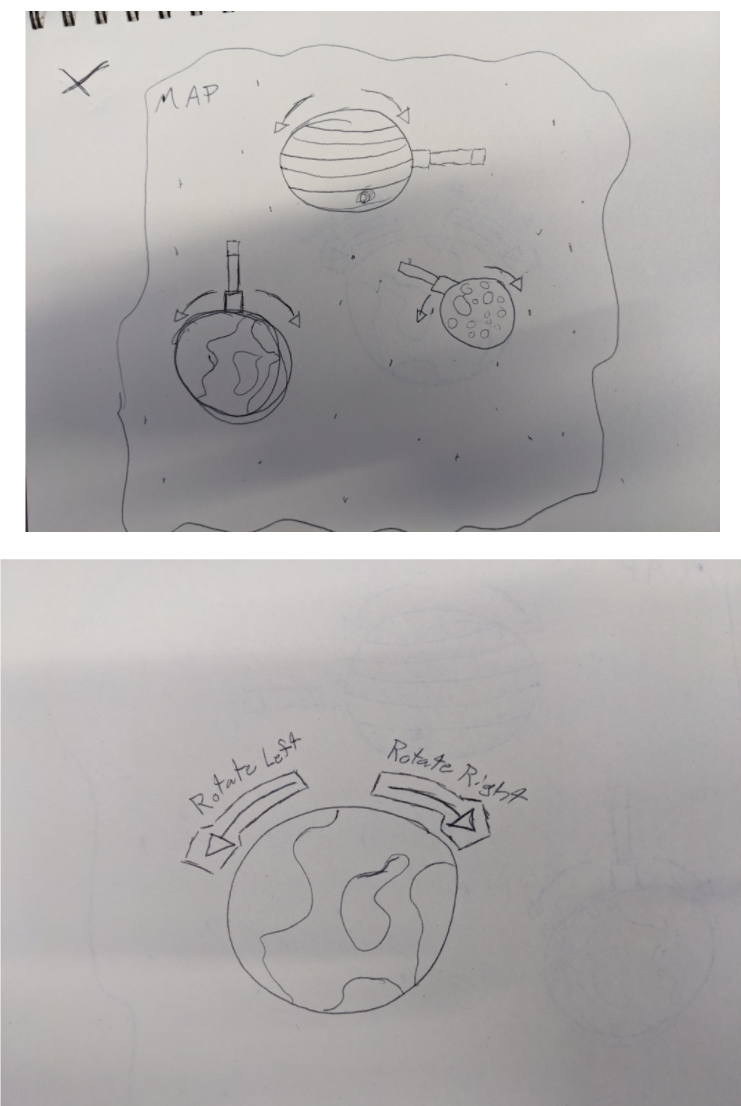
My first idea explored something I’ve always been drawn to: space, planets, and orbital patterns. I pitched a solar‑system rotation puzzle where players align planets so that specific connection points form a path.
The physical component was a printed star map showing all planetary connection points. Players would use the map to plan rotations and understand how each planet linked to the next.
- Theme: Solar system / planetary alignment
- Structure: Non‑linear, multi‑area, no time limit
- Physical Component: A map revealing all connection points
- My Work: Early sketches, system layout, puzzle flow
Planet Rotation Concept Sketch
My Proposed Design — The Maze of Code
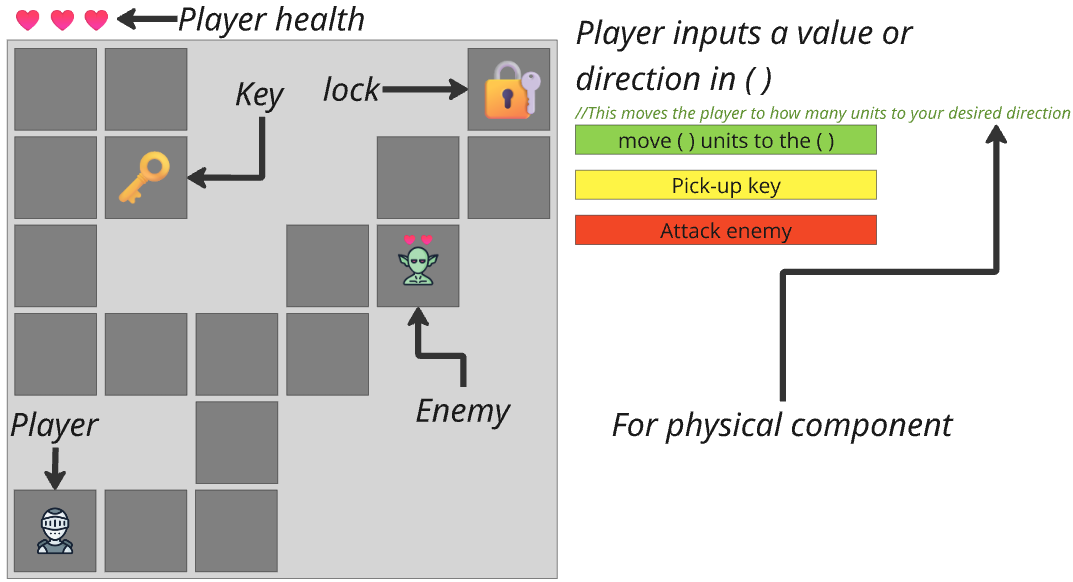
My formal pitch was a logic‑driven puzzle game called The Maze of Code, where players help a knight escape a maze by assembling blocks of code.
The goal was to teach players how to think in small, logical steps — almost like a gentle introduction to programming.
Core Mechanics
- Green blocks: Move units in a chosen direction
- Yellow blocks: Pick up key
- Red blocks: Attack enemy
- Players drag and drop blocks, then insert values to execute actions
Physical Component
A printed sheet of code comments explaining how each block works — a reference guide players needed to solve the puzzles.
Teach → Test → Challenge Structure
- Maze 1: Teaches movement
- Maze 2: Introduces pick‑ups
- Maze 3: Introduces enemies
- Final Maze: Combines everything
Maze of Code — Early Sketch
Team’s Chosen Direction — Chessboard Puzzle
As a team, we reviewed all proposals and selected a concept built around a chessboard puzzle. The idea was to deduce the correct moves for each piece to reach its destination.
- Structure: Level‑based progression
- Puzzle Type: Logical / environmental
- Mechanics: Dragging cards, activating levers, pressure plates, avoiding enemies
- Physical Component: A real chessboard used to plan moves
It was a strong idea, but during feedback we realized it lacked emotional clarity and didn’t fully connect the physical and digital components.
Pivot to the Final Game — The Knight and the Mad King
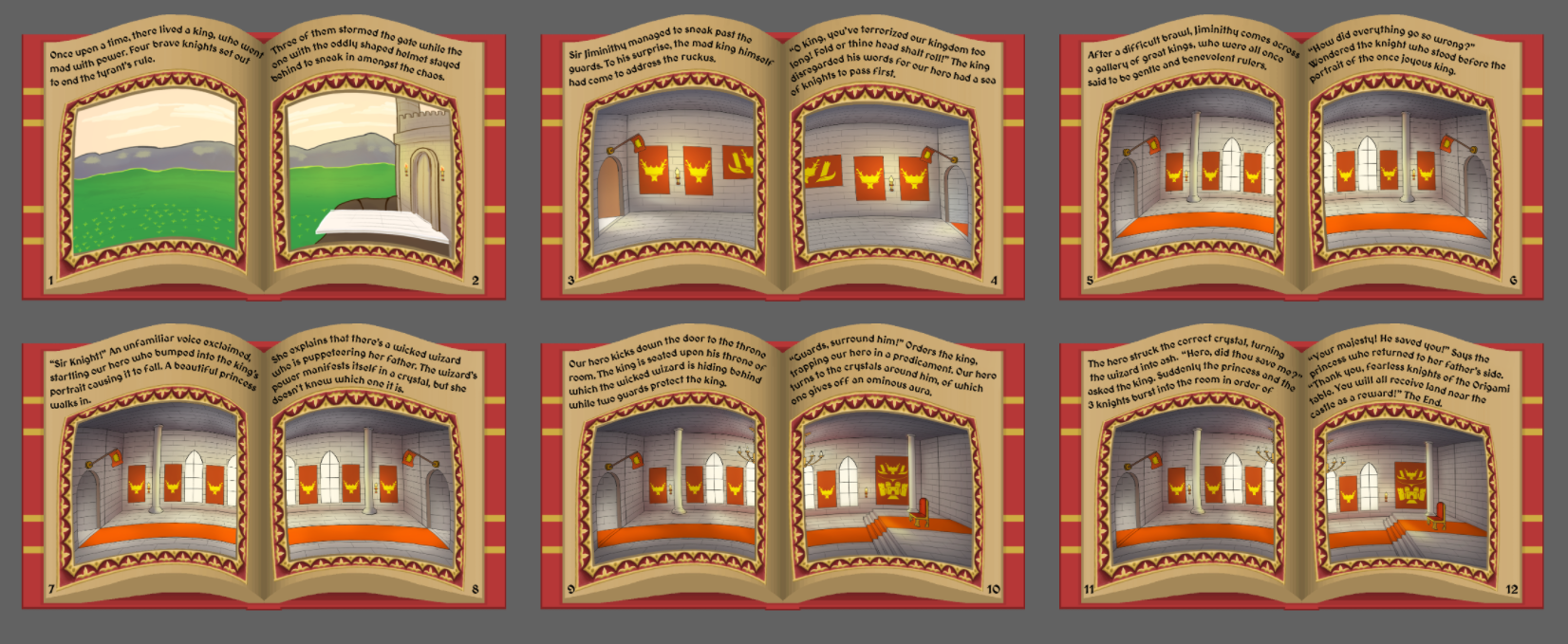
After feedback, we pivoted to a more cohesive and story‑driven concept: a storybook puzzle game called The Knight and the Mad King.
Player Role & Perspective
The player must deduce the story using clues and context, then accurately depict the event shown in the book to progress.
Game Structure
- Linear progression
- Multi‑area storybook
- Flip to the next page when the event is correctly depicted
Puzzle Type
Environmental puzzles based on interpreting visual clues and placing the correct sprites in the correct areas.
Physical Component — Origami Clues
Players fold a sheet of paper in specific ways to reveal hidden hints. This became one of the most creative and memorable physical integrations we’ve done.
My Role — Technical Artist & Unity Integrator
This week pushed me into a role I really enjoyed: technical artist. I worked across both the visual and functional sides of the project, and helped assemble the final prototype in Unity.
- Designed and illustrated the storybook
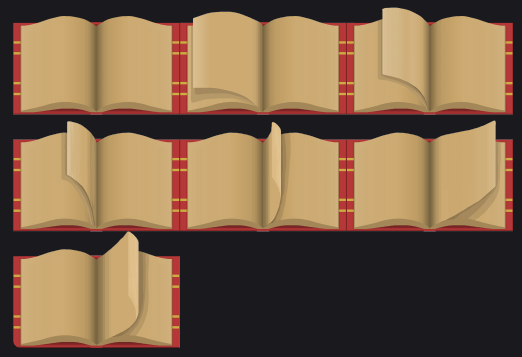
- Created animations for page transitions and interactive elements
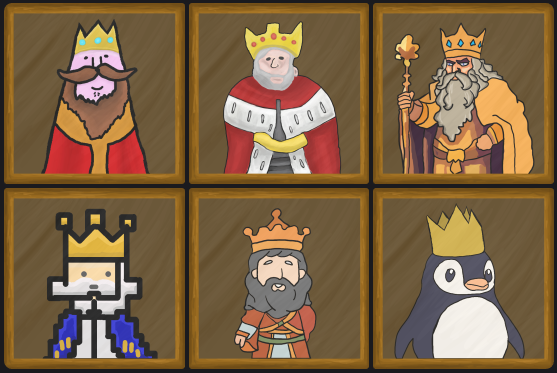
- Produced character art, including multiple king illustrations
- Set up each background image inside Unity
- Integrated sprites, puzzle logic, and interactive elements
- Ensured the book felt tactile, readable, and cohesive
- Helped assemble the playable Unity prototype
Working in Unity allowed us to rapidly test puzzle logic, refine interactions, and ensure the storybook felt alive and responsive.
Storybook Animation
Character Art — Kings
Static Page Layout
Takeaway
This week taught me how powerful hybrid design can be when the physical and digital elements truly support each other. I also discovered how much I enjoy technical art — building something that feels alive, functional, and visually cohesive. Working in Unity made the prototype feel real and creatively fulfilling.