Design Week 05 — Pump Pump Escape
A two-player minecart game controlled with bike pumps and a Makey Makey. Built in Unity, this project pushed me to think beyond traditional inputs and design an experience centered on communication, rhythm, and trust.
The goal for this week was to create a game that used a non‑conventional controller. Instead of relying on a keyboard, mouse, or standard gamepad, the core of the experience had to come from a physical, unusual input device.
Initial Concepts
I explored several directions that leaned into physicality and novelty:
- Pop‑Up Book Platformer: Each page becomes a new level.
- Saber‑Cutting Game: A slicing game using a physical “saber.”
- Barcode Fighting Game: Scanning barcodes triggers moves.
These ideas helped me think about how physical actions could be tied directly to in‑game outcomes in meaningful ways.
Team Direction — The Minecart Idea
As a team, we gravitated toward a minecart‑themed game that emphasized communication. We liked the idea of one player not being able to see the screen and relying entirely on the other player’s instructions.
The core concept was simple but strong: one player makes decisions about the track and obstacles, while the other player acts on those instructions using a non‑conventional controller.
My Proposal — Minecart of Madness
My proposal expanded the minecart idea into a more intense, physical experience. I wanted the game to feel chaotic, loud, and collaborative — the kind of experience where players are constantly talking, reacting, and laughing.
Controller Setup — Two Bike Pumps + Makey Makey
Our controller used a Makey Makey wired into two bike pumps. Each pump acted as a primary input, and the Makey Makey translated the physical pumping into Unity actions.
The key mechanic was that both players had to alternate their pumps to go fast. Pumping at the same time slowed the cart down, while falling out of rhythm made it unstable.
Player Roles & Communication
The game relied heavily on communication, and that became the heart of the experience.
Driver — Player Facing the Screen
- Sees the track, obstacles, and hazards
- Pumps in rhythm with the other player
- Calls out instructions (“Up!”, “Down!”, “Bomb!”)
- Chooses when to switch tracks
Bomber — Player Not Facing the Screen
- Relies entirely on the driver’s voice
- Pumps in rhythm to maintain speed
- Triggers bombs on command
- Switches tracks when instructed
This setup created a natural sense of trust and tension. The driver had all the information, but the bomber had all the power to act.
Development — My Contributions
I took on the technical setup and Unity integration for the project. This included wiring the hardware, testing inputs, and ensuring the game responded smoothly to the physical controller.
- Connected the Makey Makey to Unity and mapped each input
- Verified that the bike pumps reliably triggered gameplay actions
- Imported and organized art assets inside Unity
- Set up the minecart animations and responsiveness
- Helped tune the rhythm‑based movement system
This week let me lean into my technical side — wiring hardware, testing inputs, and making sure everything worked together inside Unity.
Final Game Screenshot
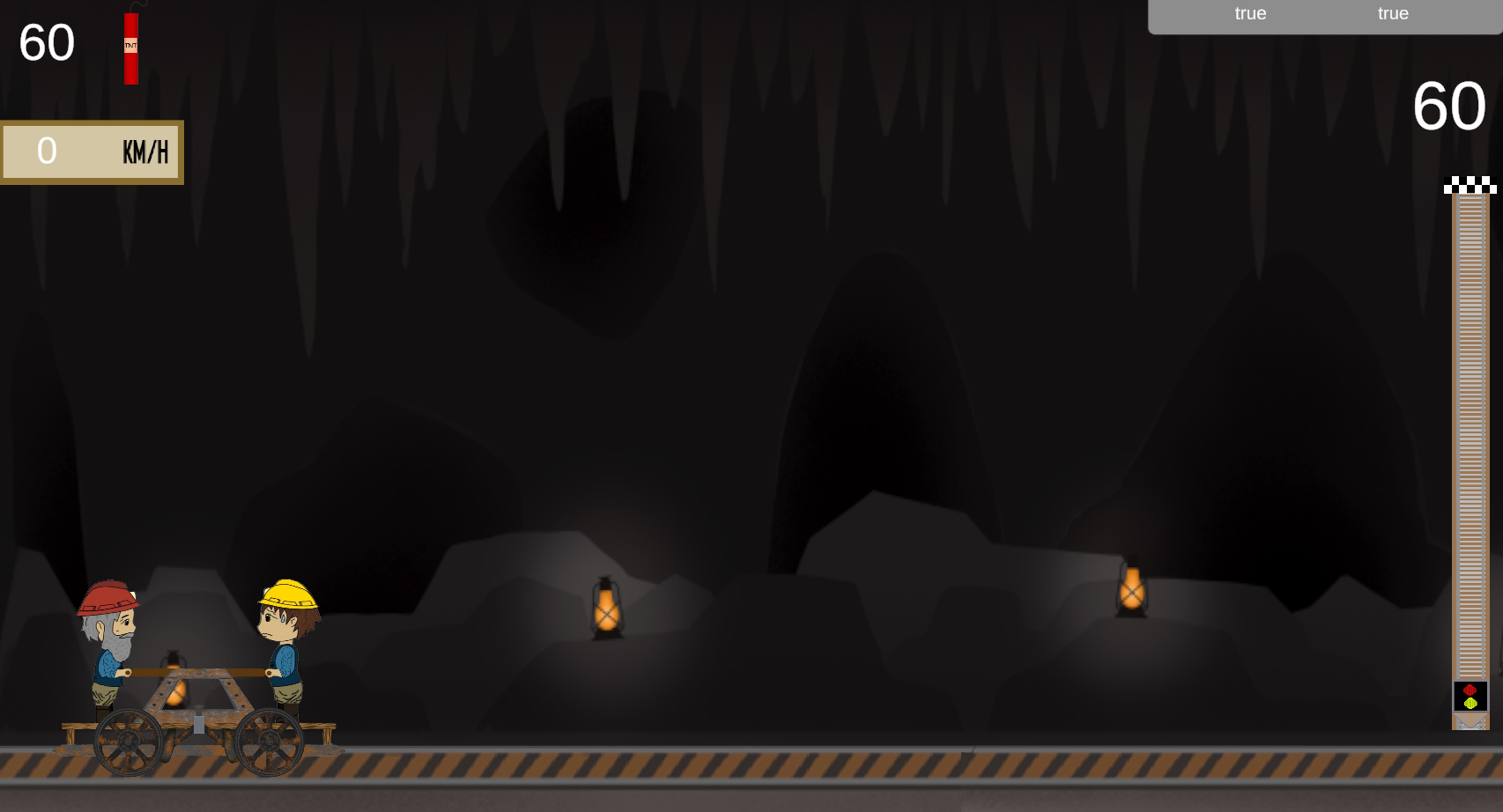
Gameplay Showcase
Final Game — Pump Pump Escape
Players had to:
- Stay in rhythm with their pumping
- Communicate clearly under pressure
- Time bombs to destroy obstacles
- Switch tracks at the right moment
- Escape the caves before time ran out
The result was a loud, energetic, and surprisingly strategic game that felt completely different from anything you could play with a normal controller.
Takeaway
This project taught me how much a controller can define the entire feel of a game. Designing around bike pumps and a Makey Makey forced me to think about rhythm, communication, and physical effort as core mechanics. Working in Unity made the prototype feel responsive and alive.