Card Game – Capitalism Simulator
A group-designed medieval fantasy card game about capitalism, resource control, and collaboration.
Capitalism Simulator is a 4-player medieval fantasy card game about collecting resources, trading, and outlasting your opponents in a world of dragons, unicorns, hippogriffs, and taxes. The core loop revolves around resource monopolies and high-value sets, wrapped in a playful critique of capitalism.
This project was created as a group collaboration. The goal was not only to design and prototype a complete physical card game, but also to reflect on the process—how we communicated, divided work, iterated on mechanics, and aligned theme with gameplay.
My primary contributions focused on the visual and production pipeline for the cards:
- Card back art: Designed the fantasy-themed back of card artwork.
- Card numbers & layout: Created the number treatments and visual hierarchy for each card.
- Asset implementation: Used Excel and InDesign to batch-place art and numbers across the full deck, ensuring consistency and print-ready layouts.
- Polish & clarity: Helped align iconography, resource visuals, and rule presentation so the game felt cohesive and readable at a glance.
Game Concept & Theme
The game is set in a fantasy medieval world where players compete to control gold, sheep, and wheat. Creatures like dragons, unicorns, hippogriffs, and a tax collector interfere with players’ plans, stealing high-value resources and forcing tough decisions.
Thematically, the game plays with the idea of capitalism as a system of extraction and advantage: players chase monopolies, exploit resource hierarchies, and try to stay afloat while random events and creature effects destabilize the economy.
Card Layout & Visual Design
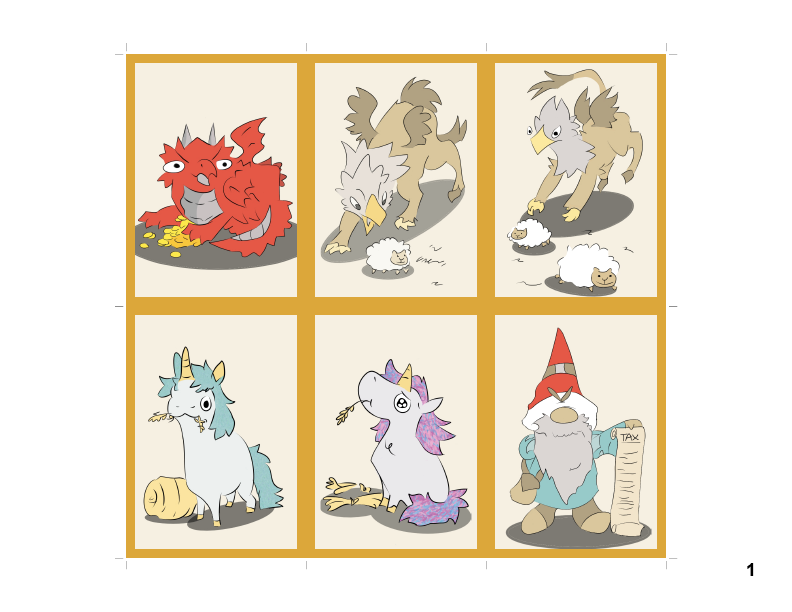
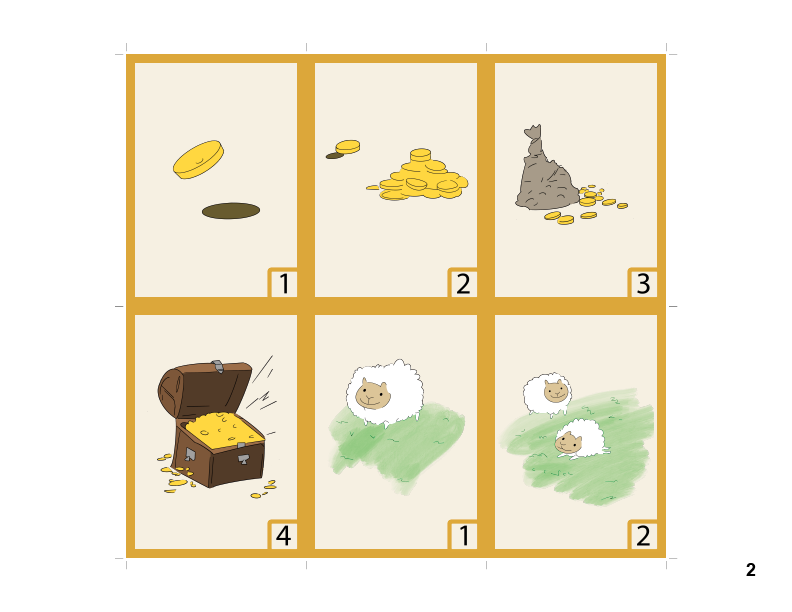
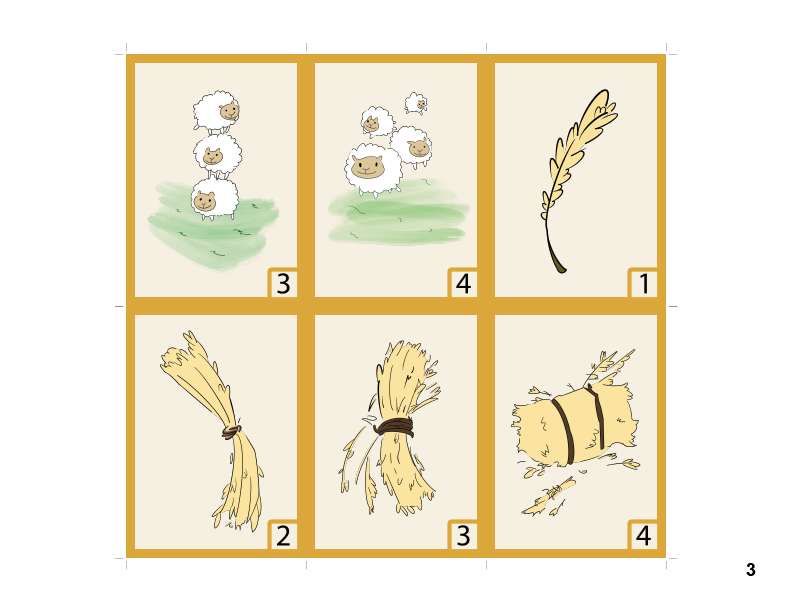
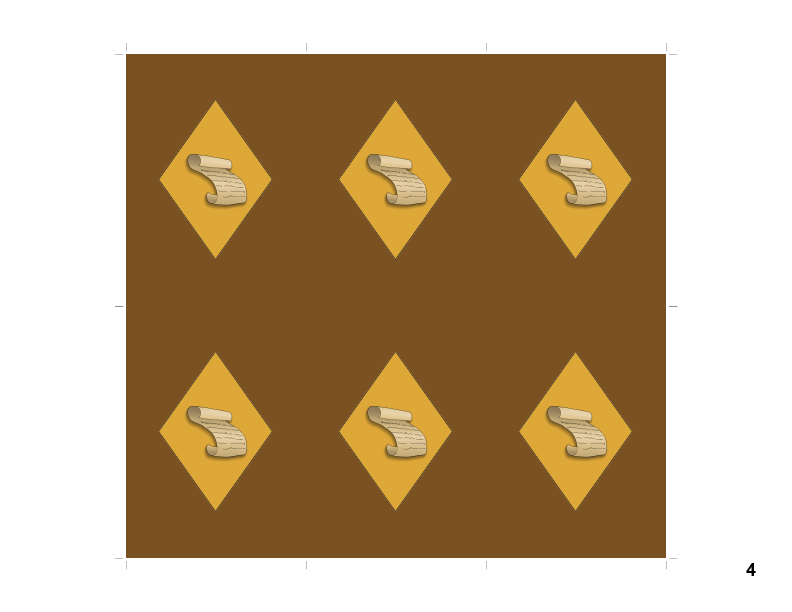
These layouts show how the fantasy creatures, resources, and numbers are arranged on the cards. I focused on keeping readability high while still leaning into a playful, illustrated style that fits the medieval fantasy tone.
Rulebook & Game Flow
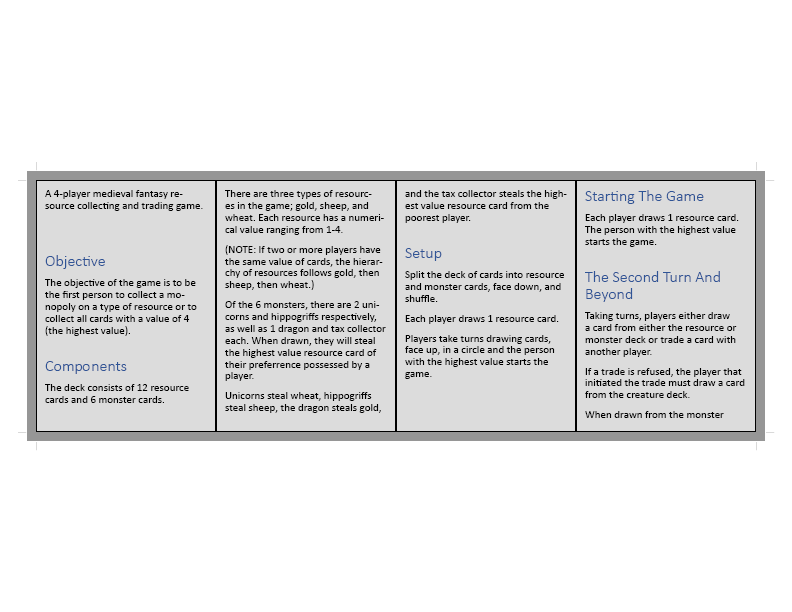
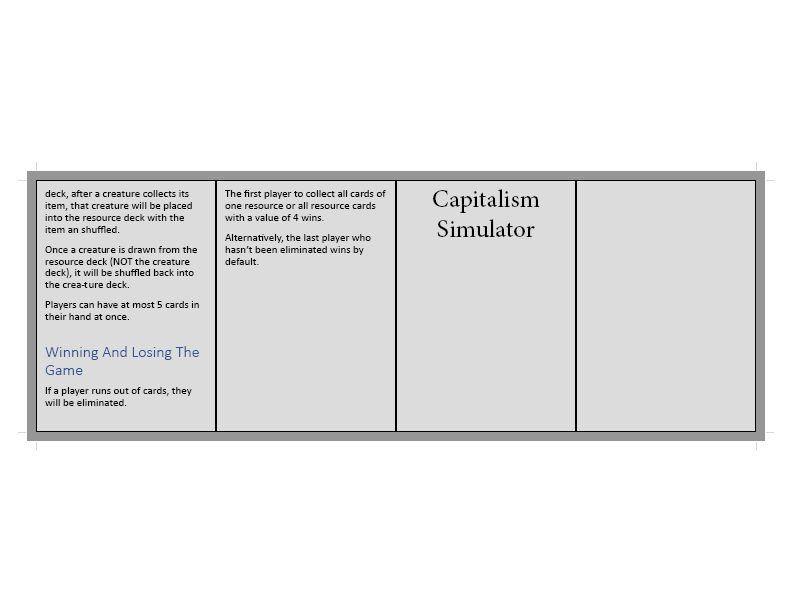
The rulebook explains how players draw from resource and monster decks, trade with each other, and get eliminated when they run out of cards. Victory can come from monopolizing a resource type or collecting all cards with the highest value.
As a team, we iterated on the rules to balance luck, interaction, and strategy. The creatures act as disruptive events, forcing players to adapt and making each round feel dynamic.
Reflection on the Group Process
Beyond the final game, a major goal of this project was to reflect on collaboration. Working as a group meant negotiating scope, dividing responsibilities, and trusting each other’s strengths— from systems design to art, layout, and documentation.
For me, this project reinforced how important it is to:
- Lock in a visual language early so everyone can design toward the same target.
- Build a production pipeline (Excel + InDesign) that makes iteration on large card sets manageable.
- Keep rules and visuals aligned so players can understand mechanics just by looking at the cards.
The result is a card game that doesn’t just function mechanically, but also feels cohesive as a designed object and collaborative artifact.